Ghorepani Poon Hill trek permits
Ghorepani Poon Hill is within the protected Annapurna Conservation Area. So, trekkers have to get the Annapurna Conservation Area Project (ACAP) permit. Likewise, every trekker has to obtain a TIMS Card to do any trek in the Annapurna region.
Our Ghorepani Poon Hill trek package is inclusive of both permits. We get the permits on your behalf. Note that you have to keep the permits on you throughout the trek because there are multiple checkpoints.
The cost of both permits is:
- Annapurna Conservation Area Project (ACAP) permit cost for foreigners: NPR 3000 per person
- Annapurna Conservation Area Project (ACAP) permit cost for SAARC nationals: NPR 1000 per person
- TIMS Card cost for SAARC nationals: NPR 600 per person
- TIMS Card cost for individual trekkers: NPR 2000 per person
- TIMS Card cost for agency trekkers: NPR 1000 per person
The Annapurna Conservation Area
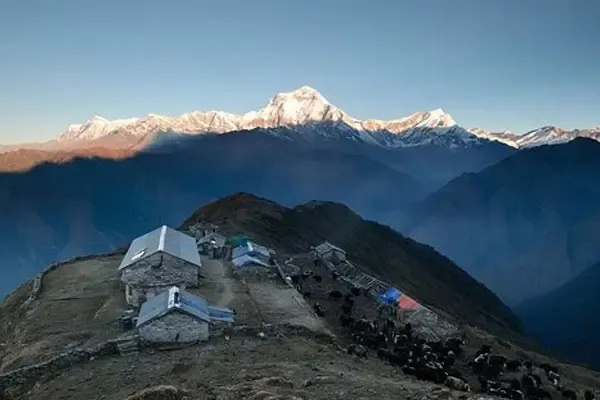
The Annapurna Conservation Area is the largest protected area in Nepal, covering around 7,629 km². The Ghorepani Poon Hill trek route is within the conservation area and spread across varying elevations.
You will trek through subtropical valleys and lush rhododendron & oak forests on this trek. Explore a variety of plants and flowers and enjoy dramatic scenery.
The Annapurna Conservation Area extends to high-altitude alpine terrain and snow-covered mountain passes. The deeper and higher you travel in this conservation area, the more remarkable biodiversity you will discover.
Likewise, the Annapurna Conservation Area is home to wildlife such as Himalayan tahr, blue sheep, langurs, musk deer, and many species of birds. Gurung, Magar, Thakali, etc, are the main ethnic groups living in the villages located inside the conservation area.
Best time to do the Ghorepani Poon Hill trek
Among all four seasons, spring (March to May), autumn (September to November), summer/monsoon (June to August), and winter (December to February), spring and autumn are the best times to do the Ghorepani Poon Hill trek.
You can also do the Ghorepani Poon Hill trek in winter and summer/monsoon, but extra preparation and caution are required due to the weather and trail conditions.
We have broken down the Ghorepani Poon Hill trek experience in all four seasons below to help you pick the one that best suits your trek expectations:
Spring (March to May) - The season of rhododendron
The foothills of the Himalayas bloom with rhododendrons in spring, including the Annapurna region. You will literally walk through rhododendron-covered trees, enjoying heavenly scenery.
Spring brings warmth and stable weather back into the Himalayas. There can be occasional snowfall or rain in the early days of March. But the weather settles down slowly by the second-to-last week of the month.
A T-shirt will be enough to keep you comfortable while trekking. However, you will need warm clothes for early mornings and evenings. And Poon Hill is always chilly. You have to wear a down jacket.
In spring, not only flowers but vegetation is also in full bloom. The temperature ranges between 10°C and 24°C and drops below 7°C in the evenings. You will enjoy clear mountain vistas and a comfortable walking climate.
Summer/monsoon (June to August) - The season of the most unstable weather but rich biodiversity
Summer and monsoon overlap each other. These are off-season for trekking in the Himalayas but an excellent time to discover the rich biodiversity of the Annapurna Conservation Area.
June to August is not a popular time for the Ghorepani Poon Hill trek because frequent rainfall makes trekking difficult. Trails are not in good condition. They are slippery and muddy, with leeches.
Likewise, the unstable weather in this season can also affect your schedule. The climate is hot and humid. Mountain views may not be clear on some days (rainy days). Even on clear days, mountains hide behind dense clouds.
Autumn (September to November) - The most popular trekking season in Nepal
Autumn is the most popular time for the Ghorepani Poon Hill trek. It is the busiest time of the year too. Mountain views and landscapes are jaw-dropping. The weather is stable in autumn. The climate is neither too hot nor too cold.
Most importantly, the monsoon rain clears the pollution, so the visibility is excellent. The daylight hours are also longest in autumn. The forests begin to change color, which makes the scenery out of this world.
To avoid busy trails, you can trek at the start or end of the season. The temperatures range between 10°C and 24°C in autumn. Again, mornings and evenings are comparatively colder.
Winter (December to February) - The coldest but also the most magical time of the year
Winter is one of the best times to do low-altitude treks like Ghorepani Poon Hill. The trails and lodges are open. As the flow of trekkers is almost none, you will enjoy a peaceful trek and low accommodation and food costs.
December to February is the coldest time of the year in the Himalayas. Everything is freezing. Snowfall is common on the Ghorepani Poon Hill trek route. It makes the landscape like a winter wonderland.
Daytime is mostly bright and sunny. So, you will enjoy some of the clearest mountain views in winter. However, there can be a handful of dark, gloomy days, too. You have to pack proper winter clothes and gear.
Ghorepani Poon Hill trek difficulty
Considering all the factors, the Ghorepani Poon Hill trek difficulty is regarded as moderate. It is a beginner-friendly trek with manageable challenges.
Unlike most treks in Nepal, you do not travel far away from a city on the Ghorepani Poon Hill trek. The trailhead is easily accessible in roughly two hours of driving.
The trail ascends and descends most of the way and includes hundreds of stone steps, so you need decent fitness. 5 to 6 hours of walking is required every day.
The risk of altitude sickness is also low on the Ghorepani Poon Hill trek because the highest point is only 3,210 meters. Nevertheless, you will have an adventurous trek and breathtaking mountain vistas.
There are not many steep sections. You will mostly walk through terraced fields at the start of the trek and later pass by rhododendron and oak forests. Follow your guide's instructions, and you will be fine.
- Trek distance: You will cover approximately 45-50 kilometers in five days of trekking from Nyapaul to Nayapul
- Difficulty: Moderate
- Daily walking: 5 to 6 hours on average
- Daily elevation gain: 400 to 700 meters
- Max elevation: 3,210 meters (10,531 ft)
Altitude sickness on the Ghorepani Poon Hill trek
Altitude sickness risk is very low on the Ghorepani Poon Hill trek because the maximum elevation is only 3,210 meters. Thanks to the gradual ascent, most trekkers complete this trek without any altitude sickness symptoms.
That said, you cannot be careless and must follow the preventive measures mentioned below:
- Maintain a steady pace while ascending and keep a uniform pace. You will not get tired easily, and it will increase your walking time.
- Do not have alcohol while hiking because it will dehydrate you, and that leads to altitude sickness.
- Drink plenty of water daily (at least 2-3 liters) and have soups and tea.
- Do not ignore symptoms of altitude sickness such as headache, vomiting, stomachache, loss of appetite, breathlessness, insomnia, dizziness, and nausea. Address these symptoms quickly with the help of your guide.
- Listen to your body. It is important that you are aware of the discomforts you feel because one of them can be an early sign of altitude sickness.
- Get proper sleep and have carbohydrate-rich meals daily.
Accommodation on the Ghorepani Poon Hill trek
The Ghorepani Poon Hill trek route has a well-established network of lodges that offers everything from budget-friendly accommodation to premium services. You will find a good selection of lodges in all main night stops along the way, such as Tikhedhunga, Ulleri, Ghorepani, Tadapani, and Ghandruk.
Trekkers should know that accommodation in the mountains is simple and the services are limited. A few luxury lodges have refined interiors and additional services, but the majority of the lodges are basic.
We will book the best standard lodges along the way, where you will get comfortable beds and practical services. Rooms are usually twin-shared, and shared bathrooms are common.
Single rooms cost extra money, and rooms with private bathrooms are limited. If you want the best rooms and service, we recommend booking the trek early. This allows us to make early reservations for you.
- Sleeping conditions: You will get a separate bed with a pillow and blanket. One blanket provided by the lodge may not be enough, so a sleeping bag is recommended. Rooms are not heated, but you can get an electric blanket at an additional cost.
During the peak trekking seasons, trekkers constantly come and go from lodges. The walls are thin, and it is common to hear sounds. You can carry noise-cancelling earbuds. They will be very useful.
- Dining area: The dining area is shared among trekkers. It is a common space where trekkers have food and socialize with each other.
- Bathrooms: Standard lodges mostly have bathrooms. There can be private bathrooms in some rooms, but usually they are pre-booked. Western-style toilets are available in most lodges.
- Hot showers: Hot showers are available in many lodges. You may get a bucket of hot water for NRP 300 to NRP 500. Yes, it is a paid service because locals have to use gas or solar heating to warm the water.
- Electricity and charging: You can charge your cameras and mobile in the lodges, but it will cost you extra money. Most lodges rely on solar power, so they charge a few extra bucks for this service.
Hygiene and cleanliness:
- Take a shower soon after reaching the lodge rather than later in the evening. It will be easier for you to warm up.
- Pack toilet paper, soap, and shampoo. Keep your shower routine as minimal as possible because you will have limited water for showering.
- Carry hand sanitizer and wet wipes.
- Pack a quick-dry towel.
- Carry toothpaste, toothbrush, and your personal skincare. The climate is quite dry and cold in the Himalayas. So, definitely pack a good moisturizer.
- Pack lightweight sandals or flip-flops for the bathroom.
- You may not get a chance to wash and dry the clothes while trekking. So, it is best to pack extra pairs of underwear, socks, and pants.
Throw your waste at designated sites to reduce environmental impact.
Food and drinking water during the Ghorepani Poon Hill trek
Food and drinking water service is also excellent on the Ghorepani Poon Hill trek. Our Ghorepani Poon Hill trek package includes three meals a day - breakfast, lunch, and dinner.
You can find a variety of food ranging from traditional Nepali dishes to Western options. Non-veg items are also widely available on the Ghorepani Poon Hill trek.
It is important to eat carbohydrate-rich meals for breakfast and lunch. It will provide ample energy to walk for long hours. Likewise, you can munch protein bars and other snacks while trekking.
Buy personal snacks, trail mix, nuts, and protein bars in Kathmandu or Pokhara for the journey.
Nepali and local food options:
- Dal bhat
- Thukpa
- Thenduk
- fried rice
- Rice with vegetable or chicken curries
- Gundruk soup
- Dhido
- Local-style potatoes, veggies, and savory pancakes
- Momo
- Chowmin
- Tibetan bread
- Chatpateh (a popular snack)
- Waiwai (instant noodles)
- Garli soup
Other options:
- Pasta
- Spaghetti
- Pizza (only available in a few villages)
- Sandwiches
- Pancake (sweet)
- French fries
Breakfast options: For breakfast, you will mostly have the following food during trekking:
- Oatmeal
- Porridge
- Toast with jam or honey
- Eggs (boiled eggs or omelet)
- Boiled potatoes
- Muesli
- Tibetan bread
- Paratha
- Tea or coffee
Drinking water:
Hydration is the key to avoiding altitude sickness and adjusting to a changing environment. So, you cannot take it lightly.
Boiled water is available in all lodges along the way. It doesn't cost much and is also good for the environment.
Before you drink water from the tap or stream, make sure to treat it with a water purification tablet. It ensures you do not get indigestion or stomach problems.
You should aim to drink 2-3 liters of water a day to stay hydrated. Combine soups, teas, and other fluid intake with it. Limit coffee and avoid alcoholic drinks.
Food tips:
- Do not skip your breakfast. You need energy to go through the first stretch of the trail before lunch break.
- Have dal bhat for lunch. It offers ample carbohydrates required for sustained energy.
- The higher you ascend, the lower your appetite will get. Nevertheless, you have to eat to be in good shape.
- Carry ample trail snacks.
- Get electrolytes for quick energy and hydration.
- Choose freshly cooked meals and have warm food.
- Be cautious with meat. Check meat freshness before ordering non-veg dishes.
- Do not have spicy food or experiment while on the trek. You do not want to get sick and hike.
- Have garlic soup daily. It is great for acclimatization.
Communication
Compared to other trekking routes in Nepal, the network is better on the Ghorepani Poon Hill trek route. However, it is not guaranteed that you will get a reliable continuous network throughout the way.
While passing through forests and some other sections, there will be no network. In villages like Ulleri, Ghorepani, Tadapani, and Ghandruk, both mobile and WiFi networks are available.
- Buy a local SIM with a data package in Kathmandu or Pokhara (before starting the trek).
- Download important maps and travel documents for offline use.
- Carry a power bank.
- Do not rely on mobile networks and WiFi.
- Share your trekking schedule with your family and our contact information.
- Download podcasts, music, or whatever you like to hear for the trail.
Travel insurance
Travel insurance covering medical treatment and emergency helicopter evacuation is a necessary document required for the Ghorepani Poon Hill trek. Trekkers have to get it themselves and get it in their own country (not available in Nepal).
Make sure your travel insurance explicitly covers trekking in Nepal. Although the Ghorepani Poon Hill trek route is well-established, the risk of bad weather, altitude sickness, natural disasters, injuries, etc, remains, and travel insurance offers reliable backup in times of crisis.
Make sure to carry your travel insurance documents. You have to submit a copy of your insurance to use before the trek begins.
Luggage weight limit
You will carry two pieces of luggage during the Ghorepani Poon Hill trek - a personal daypack and a duffel bag.
The personal daypack is carried by you, and its weight limit is 5 kg. Likewise, our porters carry duffel bags, and each trekker has a 9 kg weight limit.
You can store extra suitcases and stuff in our office or your hotel's locker room during the trekking duration. Make sure to pack light and smart.
Tips for the guide and porter
Your guide and porter contribute a lot to make your journey seamless, immersive, fun, and safe. So, it will be only fair to tip them to show your gratitude. Tipping your guide and porter is a well-practiced culture in Nepal and highly recommended.
As our Ghorepani Poon Hill trek package does not include tips for them, we recommend every trekker to budget at least 20% to 25% of the package cost for tips or whatever amount they find suitable.
Nepal tourist visa
Tourists have to get a Nepal travel visa, and most travelers are eligible for an on-arrival travel visa at Tribhuvan International Airport in Kathmandu.
The on-arrival visa is also available at land borders and other international airports in Nepal. Indian travelers do not need a visa to travel in Nepal. However, they must carry their valid passport or voter ID card.
If you are a citizen of Liberia, Ethiopia, Palestine, Afghanistan, Somalia, Cameroon, Swaziland, Iran, Syria, Ghana, Nigeria, Zimbabwe, or a refugee with a travel document, you have to obtain the Nepal travel visa through the Nepalese Embassy or Consulate Office in your country.
Check updated details about the Nepal travel visa on this official site of the Nepal Government.
You can pre-apply for the on-arrival travel visa. It expedites your visa process at the airport. Make sure to apply for the on-arrival travel visa at least 15 days before your arrival and carry the visa fee in USD (preferred).
Nepal tourist visa fees 2026:
Trekkers have to pay the visa fee themselves.
- 15 days: USD 30
- 30 days: USD 50
- 90 days: USD 25
Documents required for a tourist visa:
- Valid passport (minimum 6 months' validity)
- Completed visa form
- Visa fee (cash/card)
- Passport-size photo (rarely required now—often taken digitally)